1

Importance of Representation in Helping Professions

What do counselors, psychologists, and social workers all have in common? Each are a part of the large community of helping professions. A helping profession is a job focused on providing timely care, support, advocacy, and outreach to others in need with the intent to improve a part or the overall well-being of an individual. But what happens when there is a disproportionate group of people receiving and/or seeking help with mental illness and substance use?

The Problem

In 2019, just prior to the pandemic, more than 40 million Americans, aged 12 or older, had a substance use disorder (SUD). As noted by the CDC, the use of alcohol and other substances can lead to anxiety, depression, family problems, violence, and other health and societal outcomes. Moreover, we know that today, about 1 in 5 American adults and 1 in 5 children will experience a mental illness at some point in their lives.

When we review the latest report from the National Survey on Drug Use and Health (NSDUH), we see that Black, Hispanic or Latino, or Asian adults were less likely to receive mental health services in the past year than White or Multiracial adults. Moreover, according to NSDUH’s report, 94% of people aged 12 or older with a substance use disorder did not receive any treatment.

Why Representation Matters

This data is critical and highlights the need for representation on many fronts within helping professions. For example, research shows that negative stereotypes and stigma surrounding mental illness and substance abuse has led to the presence of self-stigma among those experiencing mental illness and substance use disorders. Self-stigma in turn has interfered with a person’s willingness to seek help and treatment.

Increasing representation among our workforce of counselors, social workers, and psychologists can be a critical step to improving strategic outreach to underrepresented and marginalized groups that do not typically seek treatment. Moreover, improving representation among these professions can also inform our communication strategies that effectively support individuals across a range of age brackets, with cultural and linguistic differences, and other important attributes that should inform our ability to provide targeted and effective care.

Our Commitment to a Diverse Workforce

At Magellan Federal, we are committed to diversifying our team of employees and provider network because we desire to reach and serve all who are in need. As such, we are committed to removing real and perceived barriers to care and we do this in part by practicing cultural humility within our organization and with those whom we serve in our communities.

As we continue to grow and diversify, we make intentional efforts to understand each person’s wholistic identity, commit ourselves to an ongoing process of compassionate self-awareness and inquiry, remain open and teachable, and we remember that society and culture is ever evolving, and we must as well.

If you possess these values, we invite you to join our team! Click the links below to learn more.

  • To learn more about becoming an employee at Magellan Federal, visit our Careers page.
  • To join our Network of EAP Providers, click here.
  • To learn more about the services and solutions we provide to our customers, click here.


13 BIPOC Mental Health Tips for Managing Relationships

Black, Indigenous and People of Color (BIPOC) are at risk of experiencing trauma due to mental and emotional injury from a variety of causes.

If you have experienced such trauma, you may find that your relationships are impacted. Consider these strategies to protect and manage your closest relationships and all that are important to you.

Recognize triggers

We can be triggered by and experience racism.

The impacts can go beyond our own emotional pain and psychological distress to affect our relationships. When we feel triggered, it’s important to:

  • Identify your emotions—Are we feeling surprise, fear, sadness, disgust, anger? It can be helpful to name to our emotions so we can use our knowledge about how to deal with them and seek help if necessary.
  • Recognize the validity of your emotions—We are right to feel the way we do, and we don’t need to waste our energy questioning that. It’s important to take the time to understand how we are feeling.
  • Manage your emotions—When we know what we are feeling, we are in a better place to be in control of how to approach and react to people and situations. This can have beneficial impacts for our relationships.

Set boundaries

With family members and friends, co-workers and even strangers, we must feel safe to be ourselves and feel respected. Setting and sticking to personal boundaries can help. Here’s how you can do it:

  • Prioritize needs—Take the time to think through where you stand, what you can and cannot tolerate, and what makes you feel happy or uncomfortable.
  • Anticipate resistance—Expect that others may not easily understand your boundaries, especially if they have different backgrounds or personalities.
  • Communicate boundaries—Clearly and directly let others know of your boundaries and reiterate them if you feel they are being overstepped.
  • Distance yourself if necessary—If you feel disrespected or have your boundaries crossed repeatedly, it may be time to cut off further interactions to protect your emotional wellbeing.

Practice self-care

We are our own best advocates. It is vitally important that we take time to do the things that make us happy, keep us healthy and give us an outlet from negativity. Not only will our wellbeing improve, but our relationships will also benefit. Try these:

  • Try a delicious new recipe—Taking time to enjoy cooking or baking can be relaxing and fruitful when it’s time to eat!
  • Enjoy quiet time to rest or nap—Sometimes it can be hard to take a break. Take the opportunities as they arise and enjoy every moment!
  • Catch up for a visit or phone call with a loved one—Connecting with others can increase your sense of safety, belonging and security.
  • Read a book or start a hobby—Keep your mind active and engaged in activities that bring you joy.
  • Volunteer—Giving of yourself to help others can improve your confidence, self-esteem and life satisfaction.
  • Get outside for fresh air and exercise—Sunshine and nature have been proven to boost mood.

Additional emotional support resources

For more on BIPOC mental health, visit our website for July BIPOC Mental Health Awareness Month, MagellanHealthcare.com/BIPOC-MH, and be sure to check out the BIPOC mental health tip sheets and awareness campaign toolkit.

You can also check out a recording from our webinar, “BIPOC mental health and relationships.”


Five Ways to Connect With Others and Reduce Loneliness

On May 3, the U.S. Surgeon General issued an advisory calling attention to the public health crisis of loneliness, isolation, and lack of connection, calling it an “Epidemic of Loneliness and Isolation.”

Loneliness is the feeling of being isolated, or alone. It isn’t always tied to the amount of time you spend with other people but can come from a gap between the relationships you have and the ones you need or want.

There may not be a magic cure for loneliness, but there are healthy ways to cope and reconnect socially and regain a sense of belonging. Here are five steps to reduce loneliness:

  1. Try helping someone else – Helping just one person at one time is a way to connect that improves the life of another, makes you feel better about yourself, and can be a great way to help people and meet others who share your interests. You can smile and be friendly, stop to help a neighbor, volunteer your time or donate food.
  2. Think about getting a pet or finding a way to interact with animals – A pet can be a great companion, and source of comfort and may also lower stress and blood pressure. If you can’t have a pet, there are many volunteer opportunities to help animals in every community.
  3. Take care of the relationships you already have – Reaching out to friends and family can help strengthen your sense of belonging. Set aside a few hours a week to connect. There doesn’t have to be a specific reason to call, and the call doesn’t have to be that long. A familiar look or a loving smile can change our experience instantly, even if we are far away or unable to see each other. You never know how reaching out to just one person may connect you to others.
  4. Find new connections through activities you enjoy – Start or restart a hobby. Take a class to learn something new. Check out programs at the library or community center. You can invite friends or acquaintances you want to get to know better. Alternatively, you can go alone and meet people who share at least one interest of yours.
  5. Talk with a counselor – It can be hard to make changes on your own and scary to think about being in social situations. If loneliness makes it hard for you to go about your day, a counselor can help.

As you think about taking small steps, remember the importance of self-care to help you feel better from the inside out. Exercise, healthy eating, proper sleep, sunshine and meditation are good ways to improve your emotional health.


Sources:


Feeling and dealing with emotions

Have you ever been so happy or upset that it was difficult to function and go about your daily tasks and responsibilities? Or maybe something was bothering you and you didn’t feel quite right, but you couldn’t pinpoint exactly why. Sometimes it’s easy to identify our emotions, especially when they are very strong or overwhelming, like in the case of grief or joy. Other times, it can be more difficult, such as when experiencing shame or even love.

Identifying our emotions is a first step in managing them, and both are important skills in getting through life’s ups and downs and feeling more in control about how we approach and react to people and situations. Of course, we must feel our feelings. We should acknowledge and celebrate happy times, listen to our instincts if we are afraid, and otherwise give ourselves the time we need to fully experience our emotions. In this post, we’ll focus on and provide support for when we are struggling with nagging or intense emotions.

Recognizing your emotions

You might be wondering why recognizing your emotions and feelings is important. Maybe you think it’s obvious what you are feeling at any given moment. In some cases, it is. Even then, it is important to name the emotion or feeling. This allows you to get what you need from it and effectively manage it so it doesn’t become disruptive in your life. It can be difficult to deal with an emotion and move on if you haven’t identified what it is.

For example—You’re sitting at your desk at work and not feeling like yourself. You’re anxious about the work you must complete. You could sit there and continue trying to push through with the nagging feeling. Or you could take a moment to identify and name the emotion so you can take the appropriate steps to move on from feeling less than your normal self. This could be as easy as saying to yourself, “I am overwhelmed.” Now that you’ve identified the emotion and given a name to it, you can use your knowledge about how to deal with feeling overwhelmed and seek additional help if necessary.

A great resource for helping to identify your emotions is an emotion wheel. Magellan provides a tool you can use here. Print it or keep it open in your web browser so it’s handy when you need to name an emotion that may be distracting you or getting you down.

Accepting your emotions

You’ve recognized and named the emotion you’re feeling. Now what? What do you do to get to a better place of focus and contentment? You can start with accepting what you’re feeling is legitimate and worthy of your attention. And while you may not be happy about the situation that is causing your emotional response, we know that situations will arise that are out of our control. For instance, we may experience negative emotions due to a breakup with a partner, seeing a child make a poor decision, or watching a friend go on the vacation we so badly want. No matter the situation, fighting our emotions only serves to give them more fuel to thrive, which may not be exactly welcomed.

A tool to help you accept your reality and let go of resentments is called radical acceptance. Find more on this technique along with a short video and helpful exercise worksheets linked on our website for Mental Health Month.

Managing your emotions

When we know what we’re feeling, have accepted it, and are giving ourselves grace to deal with it, we’re in a better place to act and feel better. One technique that can help you do this is looking at your thoughts from a different perspective. For example, if you’re feeling lonely, think about the supports that are available to you—some may be just a phone call away. When you flip that lonely feeling and remember there are people who are there for you, your thoughts become more rooted in reality. You can then take action to feel less lonely by calling upon family or friends or searching online for ways to meet new people.

Throughout the often-challenging process of dealing with emotions, it’s important to be kind to yourself and practice self-care. Take time to do the things you enjoy. While you’re doing them, you can revel in the positive emotions you feel in the moment.

Support is also available in the form of mood tracking apps, which can help us understand the stressors and triggers that cause negative emotions. Find a clinically-reviewed list of these apps linked on our website for Mental Health Month.

Finally, when emotions are overwhelming and causing distress in your life, like causing changes in your personality, eating or sleeping habits, it’s important to seek the support of a therapist or other mental health or medical professional. You don’t need to suffer. There is help available that can make a difference.

Additional emotional support resources

For more on recognizing, accepting and managing emotions, visit our website for May Mental Health Month, MagellanHealthcare.com/Mental-Health-Month, and be sure to check out the Mental Health Awareness Campaign Toolkit.


Standing up to Bullying: Bullying-prevention strategies for military children

April is the Month of the Military Child, which celebrates and acknowledges the children of our service members. While living with a military family member can make children resilient and strong, this lifestyle can sometimes make them more susceptible to bullying in a school setting.

The Army’s Adolescent Support and Counseling Services (ASACS) program is a wonderful resource for military families looking for bullying awareness and prevention tactics. The ASACS program provides confidential counseling for adolescents and families to help them thrive while supporting a loved one stationed overseas.

Magellan Federal provides 23 ASACS counselors and four Clinical Supervisors at 22 Department of Defense schools worldwide and is intimately familiar with bullying issues that are prevalent within the military adolescent population. If you are a teacher, counselor, parent, or caregiver, here are some effective techniques our counselors have used to educate and help safeguard military children against bullying.

Educate with Games with Prizes

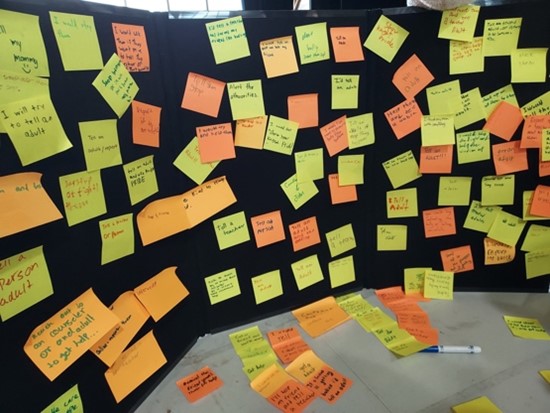
Create a bullying awareness event to open a discussion about what bullying looks like and how to take action. Have students write down what they would do if their friend was bullied on a sticky note wall and participants spun a wheel to answer questions about bullying scenarios to win a prize. This helps children understand how to identify bullying and actionable skills they can call upon to get help.

Bullying awareness event
Have students write down what they would do if their friend was bullied on a sticky note wall.


Encourage Role Play
We have also found success with conducting lessons on healthy communication through role play. Ask kids to create skits to demonstrate different communication styles. These will help participants identify assertive, aggressive, passive-aggressive, and passive communication, body language, and appropriate social filters to promote healthy communication and dialogue.
Then discuss how other communication styles could be hurtful and why social filters help to improve relationships and decrease instances of bullying.

Organize a Kindness Event
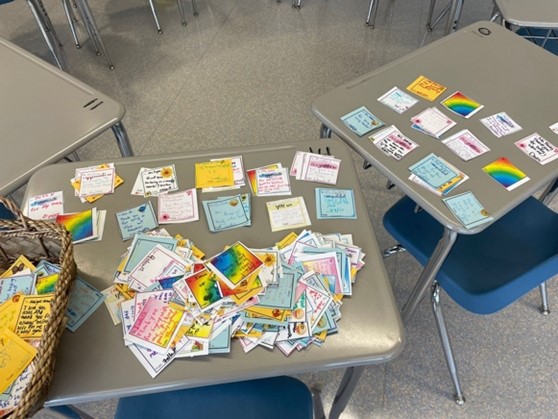
Organizing a school-wide prevention activity can help promote kindness and gratitude on a greater scale. Encourage students to write notes to friends, students, teachers, and staff about what they appreciated about that person. One of our recent events had about 700 messages written!

Kindness Event
Students to write notes to friends, students, teachers, and staff about what they appreciated about that person.


Schedule Ongoing Discussions
Conduct mini lessons on topics such as bullying prevention and empathy building. Setting aside a scheduled time to chat about bullying-related topics will keep it top of mind and build trust. These talks can also be used as an alternative to detention.

Bullying is a serious issue for military children, who may be more vulnerable in school settings due to their unique lifestyle. As caregivers, educators, and advocates, we must collaborate to provide resources and support to create a safe and inclusive environment for all children. By implementing these effective techniques, such as educating through games, encouraging role play, organizing kindness events, and scheduling ongoing discussions, we can equip military children with the necessary skills to identify and stand up to bullying. Let’s continue to prioritize the safety and well-being of our military children, not just in April — but every day.


Doc Talk: Discussing Depression in the Black Community with Dr. Beall-Wilkins

Discussions about mental health in the Black community shouldn’t be limited to Black History Month in February and BIPOC Mental Health Awareness Month in July. The conversations and action steps geared toward providing education, support, and resources require a year-round effort.

A recent article published by the Kaiser Family Foundation, shares that although Black people have made great contributions and achievements in the United States, “they continue to face many health disparities that adversely impact their overall health and well-being,” which have been “exacerbated by impacts of the COVID-pandemic, ongoing racism and discrimination, and police violence against and killings of Black people.”

What impact do these factors have on the mental health of individuals in the BIPOC community? Magellan’s medical director Rakel Beall-Wilkins, M.D., MPH shares her perspectives on depression and suggestions on ways to be supportive.

What is depression and what are some signs or symptoms?

Dr. Beall-Wilkins: Depression is a clinical illness characterized by:

  • Prolonged periods of low or sad mood.
  • Loss of interest or pleasure in activities.
  • Changes in appetite, sleep or energy levels.
  • Feelings of worthlessness or hopelessness.
  • Thoughts of death or suicide.

Depression can be caused by medical illness, substance abuse, and stressful social, academic, or occupational situations, but it can also develop more readily in individuals who have a family history of depression or other mental health conditions.

Other signs of depression may include:

  • Withdrawing from social activities, relationships, or hobbies.
  • Escalating drug or alcohol use.
  • Declining self-care in the form of poor personal hygiene and grooming.
  • Expressing feelings of hopelessness, worthlessness, and/or helplessness.
  • Neglecting to attend to chronic medical conditions or maintain follow-up with healthcare providers.

How does depression impact individuals in the Black community?

Dr. Beall-Wilkins: As of 2020, the National Survey on Drug Use and Health found that 6% of Black American adults and 12.9% of Black American adolescents experienced a major depressive episode within the last year. Despite increasing levels of depression within the Black community, studies also show that Black Americans are less likely than their White counterparts to receive psychotherapy or medications for their depressive symptoms. This disparity is largely attributed to limited access to healthcare coverage and culturally competent behavioral health providers, as well as pervasive cultural stigma.

Is it possible for someone to experience depression that is triggered by external factors and societal issues, such as violence, police brutality, political unrest, and racism? If so, how?

Dr. Beall-Wilkins: Yes, it is possible for depression to develop as a result of exposure to sociopolitical strife. In fact, during the week following the highly publicized death of George Floyd in May 2020, rates of depression and anxiety spiked from 36 to 41% among Black American respondents to the Census Bureau’s 2020 Household Pulse Survey.

Likewise, a 2018 study published in The Lancet found that police killings of unarmed Black Americans resulted in an increase in poor mental health days among Black American respondents. Though they may not know the victims of these circumstances personally, it is very common for Black Americans to collectively internalize the trauma of these events and feel despair over the possibility that a similar fate could befall them or their close family members and friends. Moreover, the repeated nature of these events can elicit sadness, hopelessness, and fear that things will never change.

What are tips for an individual that recognizes they are showing signs of depression?

Dr. Beall-Wilkins:

  • Visit your doctor and seek treatment: Regularly follow up with a primary care provider to ensure there are no untreated or undertreated medical conditions that may contribute to the development or worsening of depressive symptoms.
  • Stay connected: Stay connected to close friends, family, and spiritual community for support.
  • Diet and exercise play a role: Eat a balanced diet and engage in physical activity for at least 30 minutes a day, three times per week.

Resources:


Your Body: More Than an Image in the Mirror

The body is an amazing instrument. Major organs work together to allow you to breathe, convert food into nutrients, move in space, reproduce, protect yourself or heal from illness, and perceive and make sense of the world around you. While the body is capable of so much, why do many individuals dislike their bodies? The answer to this question is more complicated than it may appear.

What is Body Image?

Body image is a term that describes thoughts, feelings, beliefs, attitudes, and perceptions about one’s body (Hosseini & Padhy, 2022).

Specifically, body image is defined as:

  • How you see your body, including your height, shape, and weight, and individual body parts,
  • What you think and believe about your body,
  • How you feel about your body, and
  • What you do to address your feelings, beliefs, attitudes, and perceptions about your body.

Body image is an important component of overall wellbeing and influences how people function on a day-to-day basis. Body image exists along a negative/positive continuum and may change at any time. When realistic expectations, acceptance of and/or satisfaction with the body occur, a positive body image is experienced. Conversely, when thoughts, feelings and beliefs about the body are inconsistent with an ideal image one forms in their mind, a negative body image occurs (Office of Women’s Health, 2021; National Eating Disorders Association [NEDA], 2021).

How is Body Image formed?

The development of body image is a complex process. It begins in early childhood and evolves over time. The process consists of interactions between external and internal factors (Hosseini & Padhy, 2022; NEDA, 2021).

  • External Factors: Cultural/Environmental/Social—Messages from parents, siblings, peers, teachers, and the media influence beliefs and assumptions about the body. Comparisons to others coupled with a culture that focuses on beauty, perfection, and anti-aging may contribute to shaping opinions about the self. This is often seen on social media as it often perpetuates that beauty and perfection are the ultimate goals, with filters and editing tools creating a distorted reality. The constant bombardment of images promoting youthfulness can make individuals feel inadequate and self-conscious about their appearance. Traumatic experiences (accidents, sexual/physical assault, emotional neglect) may impact body image. Developmental milestones such as transitioning from child to adulthood, starting a family, dealing with adult children leaving home, and aging/retiring from work may increase the probability of fluctuating body images.
  • Internal Factors: Personality/Emotional/Psychological—Anxiety and depression, and personality characteristics such as perfectionism, rigid thinking, and high expectations of self may influence or reinforce body image.

Tips on Achieving and Maintaining a Positive Body Image

Your wellbeing is in part, dependent on your body image. Therefore, working towards and maintaining a positive body image benefits your physical and psychological health, as well as your relationships with others. These recommendations may help you in your journey (NEDA, 2021) toward an optimal body image.

  • Remember your body is merely the shell in which your emotional, physical, and spiritual person resides. Your body does not define you.
  • Take care of your body. To function properly, your body needs a consistent dose of nourishment, including food, physical activity, and social relationships.
  • When thoughts about your appearance start to overwhelm you, remind yourself of all the things your body can do. Your body allows you to move through space, view the world around you, problem-solve, experience different emotions, and connect with others.
  • Limit negative media influences: Unfollow sites that equate extreme body types (for example, very thin or very muscular) with happiness. This includes unfollowing people and influencers on social media that put a focus on unrealistic body images. Receive information on healthy dieting from your doctor, not the media. Observe the contents of advertisements with critical eyes and ears before making impulsive decisions to adopt the message or purchase the item.
  • Surround yourself with positive people and messages. Being with people you trust and receiving messages that inspire you help to prevent an unrealistic body image.

Be mindful of signs that may signal a path toward a negative body image. It is normal to engage in some of these behaviors every now and then. However, if you find that these activities are starting to interfere with or prevent you from accomplishing routine daily activities, it may be time to discuss these issues with your doctor. Avoid these behaviors:

  • Looking in the mirror multiple times a day.
  • Believing that happiness is equated to physical attractiveness.
  • Comparing your appearance to others.
  • Avoiding social situations because you are not attractive enough.
  • Wearing loose or bulky clothes to hide your body shape.
  • Engaging in extreme diets.
  • Declining invitations where eating is involved.
  • Refusing to be part of a photograph or editing photographs of yourself before sharing them.
  • Approaching hygiene needs or shopping for clothes with dread.
  • Feeling depressed or anxious, or having trouble concentrating after you eat.
  • Asking friends and family about their opinions regarding your appearance.

An ideal body is not measured by how you look. An ideal body is one that functions optimally and allows you to embrace what life has to offer. Slowly shifting your thoughts from self-criticism to ones of appreciation and respect may improve your overall wellbeing.


References


Doomscrolling: When staying up to date becomes harmful

Introduction

When disasters or tragedies occur, people seek information from traditional news sources and social media. Staying up to date is part of being an informed citizen, and while consuming media can be beneficial in moderation, “doomscrolling” — exposing yourself to a never-ending stream of distressing information — could be negatively impacting your overall wellbeing.

If you find yourself overwhelmed by the constant flow of negative information but can’t bring yourself to turn away from Twitter, you are not alone. For 50 years, Magellan Federal has helped more than three million civilian employees and their families enhance their emotional wellness and reduce stress. The following information and tips can help you to avoid doomscrolling if your social media usage is getting in the way of your wellness.

DoomscrollingDoomscrolling Defined

Doomscrolling (also known as doomsurfing) is the term used for persistent and excessive reading of negative news online. It was popularized by Quartz reporter Karen Ho in 2020 during the lockdown at the height of the COVID pandemic. Like many of us,  Ho struggled with compulsively reading upsetting news about the ongoing pandemic. She would send nightly tweets (pictured right) to her followers encouraging them to take a break from doomscrolling bad news and to get a good night’s sleep (8).

Doomscrolling Characteristics — What to Look Out For

Doomscrolling differs from regular social media usage and has four main characteristics that makes it a distinct activity.

  • This is a persistent activity that becomes habitual.
  • It is caused by environmental factors.
  • The sessions are multiple hours, and the user often loses track of time.
  • The content viewed is negative, distressing, and timely.

While typical social media usage may have one or more of the above-mentioned factors, all factors are present for doomscrolling. Further, a study used to create a doomscrolling scale found the activity was highly associated with “online vigilance, problematic internet/social media use, and FOMO” (fear of missing out) (13).

Reasons for Doomscrolling

Fear of the unknown is the primary motivator driving people to engage in doomscrolling, however, multiple factors may contribute to and perpetuate their fear.

Biological Imperative

During times of crisis or tragedy, people gather information to reduce uncertainty, create a plan, and attempt to exert some measure of control over the situation (17). This behavior is rooted in survival instincts related to paying more attention to negative information than positive and scanning the environment for danger to protect one’s family (14).

Fear of Missing Out (FOMO)

While FOMO typically refers to anxiety experienced as a result of seeing an exciting or interesting event happening elsewhere, FOMO also applies to doomscrolling. With no end to social media posts, there is always one more piece of information that could be read.

Perpetuating the Cycle

With doomscrolling, the information collected on tragedies and disasters that was meant to reduce uncertainty and allay feelings of anxiety instead increases these feelings, particularly when the events are beyond one’s control. As we scroll, we’re flooded with information that for the most part, we can do nothing about, except to keep scrolling and sharing, perpetuating the cycle. As a result, we feed the paralyzing loop of information that can lead to feelings of helplessness and despair (11).

Algorithms

It’s no secret that the goal of social media titans like Facebook and Twitter is to have users interact with their products for as long as possible. To that end, these platforms create algorithms to learn their customers’ habits and then customize the online experience to them (15). The more a user interacts with the platform, the more the algorithm “learns” what content to provide, without concern for possible user harm (8). As a result, the curated content displayed for each user plays on their emotions to keep them engaged—even negative ones. Naturally, repeated exposure to distressing content can have a negative impact on mental health.

Risk Factors

Current research findings show that certain individuals are more likely to engage in doomscrolling than others.

  • Men and younger adults regardless of ideological beliefs (13)
  • Those with anxiety or depressive disorders
  • People who score high in neuroticism
  • Those who are addicted to social media (12)
  • Individuals with previous childhood maltreatment experiences

Effects of Doomscrolling

Since the start of the pandemic, there have been multiple studies on the mental health effects of doomscrolling. Recent research findings suggest doomscrolling is associated with:

  • Increased anxiety and psychological distress
  • Lower mental well-being
  • Increased depression
  • Increased phone use
  • Post-Traumatic Stress Disorder (PTSD) symptoms
  • Decline in sleep quality

Prevention & Coping Techniques

As with most harmful habits, the best time to address them is before they start. Many of the techniques and tips provided below can be used to both prevent doomscrolling (or any excessive social media use) and also to help reduce doomscrolling once it has become a habit.

Technology Tips

  • See no evil: Provide feedback on social media posts with negative content by using the “hide post” or “block/mute” features. This will provide information to the platform algorithm to provide less of this type of content (9).
  • Set a time: Reduce the amount of time online by using screen timers and stick to no more than 30 minutes as any more has been connected to increased levels of anxiety (3, 17).
  • Scroll with purpose: Picking a specific subject to get information on will not only help meet the new scrolling time limits, but it will also create a sense of accomplishment when the information is obtained (17).
  • Subdue screen colors: As all casinos know, the more flashy and colorful something is, the easier it is to keep someone’s attention. Changing social media settings to “grayscale” will make the screens more monotone/less visually appealing and can make it easier to stop scrolling (3).
  • Search for the happy: Known as “hopescrolling,” this can lead to more positive thoughts and can help “reset” social media algorithms to show you more positive content.

Beyond Online

  • Connect with others: Share the burden with loved ones and others within your social networks to reduce anxiety (17).
  • Connect with yourself: Perform regular self-check ins by listening to your body and paying attention to how you are feeling to understand when it is time to take a break (16, 17).
  • Connect with the outdoors: Engage in hobbies that involve the outdoors including exercise and fresh air while leaving technology, and feelings of anxiety behind (17).

Clinical Support

  • Nonmedical counseling: Qualified counselors can help create a plan to address the problem. Non-medical counseling is short-term and addresses general conditions of living, life skills, improving relationships, and stress management.
  • For Clinicians: Since clients also consume social media for entertainment as well as coping measures, it may be helpful to work with them to identify alternative hobbies or activities they will enjoy that will not involve social media or other digital technology (10).

Summary

In a global society with a 24-hour news cycle and social media that offers infinite scrolling, there is always more news to consume. People can fall victim to doomscrolling when distressing events occur, leading to increased anxiety and stress, creating a self-feeding cycle that can be difficult to break.

For those wanting to stop doomscrolling, it is important to first acknowledge the behavior, be honest with how it may be affecting your mental health, and be proactive in your approach to modify your actions. No matter what your relationship is with the news, this technique will help maintain a healthy relationship with social media and overall digital wellness.