1

Becoming a Civilian Again: Career Advice for Transitioning Out of the Military

Those that raise their right hand to serve our country in the military, make a minimum of two huge transitions during their lifetime; the transition in by taking an oath to support and defend the Constitution of the United States against all enemies, foreign and domestic; and the transition out. Personally, I remember my transition into service being filled with a spectrum of emotions and above all, the feeling of being proud—proud to be able to make the commitment to my country; proud to say I was a member of the most elite military in the world; proud to become part of something bigger. Though each experience is unique, I believe feelings of pride are common with those that make the commitment to serve their country. Military members are immediately immersed in an unfamiliar world with new rules, language, friends, and many new opportunities. It is a time filled with excitement, change, growth, and fear of the unknown. Many military members look back on this time with fond memories—many with a yearning to go back, like the common wish to reunite with childhood. In contrast, the transition out of the military, also a huge transition point in one’s life, is not the same. I’d like to offer my unique personal experience of what I found most challenging and provide some excellent resources that are available to all veterans and family members through the Transition Assistance Program and Military and Family Life Counseling Program.

The Challenges of Transitioning Out of Service

For me, the “transition out time” was a period filled with excitement and opportunity for growth, but it was not at all easy to navigate. Although I had always had a plan in my head for what I would do once I was discharged, the guidance and resources were not as formulaic as the transition into military life. I was excited to become a civilian free to take any job I wanted, but it was overwhelming not to have concrete steps for how to get there.

It is widely known that the military has a way of building its members up to feel as though they can accomplish anything and believe that they have a step up when it comes to the civilian population. While this may be true, it can be harmful to solely rely on this expectation. It is better to be aware of the potential challenges in advance so you can arm yourself with available resources and tools to navigate a successful transition.

In my experience, these are the top three challenges when transitioning back into civilian life:

1. Unrealistic expectations

  • It will be easy to get any job I want.
  • I will get paid more as a civilian doing the same thing.
  • Working 40 hours a week will be east compared to being on call 24 hours a day.
  • My experience will be respected; everyone loves military members.

I will get paid enough retirement that I won’t need to work.

2. Loss of identity

  • No longer a leader or looked up to by others daily
  • Loss of purpose
  • No one really understands what you did in the military
  • Bored with the new job
  • Loss of connection to your familiar support system
  • Work no longer makes a difference on a large scale
  • Communication style in the civilian world is not the same

3. Limited immediate support 

  • Just a number to the VA
  • No longer have a chain of command to help
  • Waiting list to get support
  • Navigating resources alone

Combat Veteran’s Careers states, “The military provides a sense of purpose, well-defined roles and hierarchy, camaraderie, honor and mission—things that can be hard to find or define in the civilian world.” In my experience, this could not be more true. Although I planned and prepped for my exit, I still fell victim to some of these common beliefs and challenges. So, if you have a plan—or even if you don’t—I encourage you to take advantage of the programs and resources available to you while you are still in service to get a jump start on your transition to a successful civilian career. Here are a few I found helpful, and that Magellan Federal assists in delivering.

Available Career Resources

Transition Assistance Program (TAP)
The Department of Defense TAP provides lots of information, tools, and training to share tips on everything from resume prep to financial planning. For example, I remember them bringing in models to our installation from a local suit store to help us prepare for business dress. TAP is available to all transitioning service members and has a wealth of eLearning guides, trainings, and workshops. Connect with your local Transition Assistance Office or view more information on the DoD TAP website.

Military and Family Life Counseling Program (MFLC)
Military and Family Life Counselors (MFLCs) are on the ground at installations around the world providing confidential non-medical counseling to service members and their families to address issues such as improving relationships, stress, parenting, and grief. MFLCs are also armed with a plethora of training resources specific to making the transition from the military to civilian life. I highly suggest connecting with an MFLC at least a year out from your final separation date, even if it is just to help you organize your thoughts and help you more clearly define the path to your future. Contact your installation’s Military and Family Support Center to get started.

Education and Employment Initiative (E2I)
E2I is a Department of Defense program that assists wounded, ill, and injured Service members with education and career opportunities as part of their recovery and transition to civilian life. E2I’s Regional Coordinators work with Service members to identify skills and match those skills to a desired career path. Contact your Regional Coordinator to request an application, or visit the E2I website.

Tips for Successful Transition
While these programs and other resources will help you build a good foundation, it is ultimately up to you to put a detailed plan in place and complete the necessary steps to prepare for your civilian career.

1. Learn about careers—complete a self-assessment, compare occupations, and research industries
2. Find training—research basic adult education, apprenticeships, certifications, and scholarships
3. Network—connect with professionals in your career of choice to help with advice, job leads, and contacts; inform them of your skills and employment goals

It’s never too early to get a head start on preparing for a career that’s best for you and your family after service. I hope these tips will get you started planning today with confidence.


References
CombatVeteranstoCareers.org, “5 Reasons Veterans Struggle to Transition to the Civilian Workforce,” view article
Military OneSource


Spotlight Magellan Health: Cara Albanese

With the start of Autism Acceptance Month in April, Senior Manager of Clinical Care Services Cara Albanese is focused on creating innovative and inclusive ways to better serve the needs of individuals with autism spectrum disorder (ASD). Albanese, who has been with Magellan for over six years, oversees the Applied Behavioral Analysis (ABA) operations in the California markets, including ABA Services for some commercial accounts. As manager of a team of eight employees, Albanese and her team review treatment plans and work directly with ABA providers to ensure adherence to the main objectives for their membership and that treatments align with the Magellan Health standards that provide members with the best care possible. Continue reading to learn more about what innovative programs and new initiatives for individuals with ASD Albanese is working on:


What sort of projects are you currently working on?

We started piloting a value-based model for ABA in October in our California market. Magellan is pioneering this type of program for ABA services. Now we are working on evaluating the findings to establish evidence-based practices and drive outcomes-based programs across the ABA industry. Implementing this program will allow us to evaluate treatment planning and delivery to continuously improve care for children with ASD and help the families who care for them.

What are your thoughts on the culture here at Magellan? How does that culture make Magellan the best place to do these innovative projects?

Magellan has a very strong culture of innovation and values our members’ satisfaction. We’re always looking to grow the field and improve data-driven outcomes for our membership. At Magellan, we continue to expand our knowledge and look at autism services across the industry as we continue the growth of our department. We work with a multidisciplinary team giving us insights from a variety of medical professionals. Being able to work with a variety of medical professionals ensures that our members are receiving the best care, as we can provide a holistic and prudent approach to care. Our clinical leadership at Magellan creates a supportive and collaborative environment to think outside the box and increase innovative thinking.

What does Autism Awareness and Acceptance Month mean to you?

The prevalence of autism has continued to rise to a rate of one in 36 children in the United States. Most individuals know someone who has autism or some experience with someone diagnosed with autism. This increased awareness allows us to start to support this population as a community. We can do this as clinicians by modifying and changing the science around ABA to support the current needs of the ASD population and their families. We can continue to increase inclusivity of children and adults with ASD, as they may learn and engage differently. Everyone should be embraced for their individual abilities.


Feeling and dealing with emotions

Have you ever been so happy or upset that it was difficult to function and go about your daily tasks and responsibilities? Or maybe something was bothering you and you didn’t feel quite right, but you couldn’t pinpoint exactly why. Sometimes it’s easy to identify our emotions, especially when they are very strong or overwhelming, like in the case of grief or joy. Other times, it can be more difficult, such as when experiencing shame or even love.

Identifying our emotions is a first step in managing them, and both are important skills in getting through life’s ups and downs and feeling more in control about how we approach and react to people and situations. Of course, we must feel our feelings. We should acknowledge and celebrate happy times, listen to our instincts if we are afraid, and otherwise give ourselves the time we need to fully experience our emotions. In this post, we’ll focus on and provide support for when we are struggling with nagging or intense emotions.

Recognizing your emotions

You might be wondering why recognizing your emotions and feelings is important. Maybe you think it’s obvious what you are feeling at any given moment. In some cases, it is. Even then, it is important to name the emotion or feeling. This allows you to get what you need from it and effectively manage it so it doesn’t become disruptive in your life. It can be difficult to deal with an emotion and move on if you haven’t identified what it is.

For example—You’re sitting at your desk at work and not feeling like yourself. You’re anxious about the work you must complete. You could sit there and continue trying to push through with the nagging feeling. Or you could take a moment to identify and name the emotion so you can take the appropriate steps to move on from feeling less than your normal self. This could be as easy as saying to yourself, “I am overwhelmed.” Now that you’ve identified the emotion and given a name to it, you can use your knowledge about how to deal with feeling overwhelmed and seek additional help if necessary.

A great resource for helping to identify your emotions is an emotion wheel. Magellan provides a tool you can use here. Print it or keep it open in your web browser so it’s handy when you need to name an emotion that may be distracting you or getting you down.

Accepting your emotions

You’ve recognized and named the emotion you’re feeling. Now what? What do you do to get to a better place of focus and contentment? You can start with accepting what you’re feeling is legitimate and worthy of your attention. And while you may not be happy about the situation that is causing your emotional response, we know that situations will arise that are out of our control. For instance, we may experience negative emotions due to a breakup with a partner, seeing a child make a poor decision, or watching a friend go on the vacation we so badly want. No matter the situation, fighting our emotions only serves to give them more fuel to thrive, which may not be exactly welcomed.

A tool to help you accept your reality and let go of resentments is called radical acceptance. Find more on this technique along with a short video and helpful exercise worksheets linked on our website for Mental Health Month.

Managing your emotions

When we know what we’re feeling, have accepted it, and are giving ourselves grace to deal with it, we’re in a better place to act and feel better. One technique that can help you do this is looking at your thoughts from a different perspective. For example, if you’re feeling lonely, think about the supports that are available to you—some may be just a phone call away. When you flip that lonely feeling and remember there are people who are there for you, your thoughts become more rooted in reality. You can then take action to feel less lonely by calling upon family or friends or searching online for ways to meet new people.

Throughout the often-challenging process of dealing with emotions, it’s important to be kind to yourself and practice self-care. Take time to do the things you enjoy. While you’re doing them, you can revel in the positive emotions you feel in the moment.

Support is also available in the form of mood tracking apps, which can help us understand the stressors and triggers that cause negative emotions. Find a clinically-reviewed list of these apps linked on our website for Mental Health Month.

Finally, when emotions are overwhelming and causing distress in your life, like causing changes in your personality, eating or sleeping habits, it’s important to seek the support of a therapist or other mental health or medical professional. You don’t need to suffer. There is help available that can make a difference.

Additional emotional support resources

For more on recognizing, accepting and managing emotions, visit our website for May Mental Health Month, MagellanHealthcare.com/Mental-Health-Month, and be sure to check out the Mental Health Awareness Campaign Toolkit.


Thinking about Drinking: April is National Alcohol Awareness Month

According to the National Institutes of Health’s (NIH) National Institute on Alcohol Abuse and Alcoholism, alcohol contributes to more than 200 health conditions and about 99,000 deaths in the U.S. each year.[1] According to the CDC, one in six adults in the U.S. binge drinks with 25% doing so at least weekly.[2]

April is National Alcohol Awareness Month, which is a time to increase your personal awareness about alcohol abuse and alcoholism and to recognize these disorders, which can be treated.

Magellan Federal’s Senior Manager in the Adolescent Support & Counseling Services (ASACS), Allison Welliver, LMHC, MCAP, shares her insights on why this month is important. Welliver is a licensed mental health counselor and a master’s level certified addiction professional.

Q: Why is National Alcohol Awareness Month important?

Allison Welliver: National Alcohol Awareness Month is important because it brings awareness to alcohol abuse and dependency and allows people to be screened to see where their use of alcohol falls (low, moderate, or high risk for alcohol abuse or dependence). It also allows people to see how their use of alcohol compares to alcohol use by other people of the same age and sex.

Since alcohol is a legal drug, and so often used in social situations and celebrations, it can be difficult to see when alcohol abuse is happening.

Q: What are signs that someone is addicted to alcohol?

AW: Signs of dependence on alcohol can be behavioral/social or physical. Behavioral/social signs include secretive use, heavy drinking, drinking alone, drinking at inappropriate times of the day (in the morning), and continuing to drink despite the negative impact it has on your relationships, job, and health. Physical signs may include developing a tolerance, developing the “shakes” when not drinking alcohol, disrupted sleep, lethargy, or headaches, and needing a drink to alleviate negative symptoms.

Q: What is the connection between this addiction and mental health?

AW: Addiction and mental health problems are frequently comorbid, meaning that they often occur at the same time. It is a question of which comes first – does the mental health problem cause the addiction or vice versa? Many times, people turn to alcohol or other drugs to cope with mental health concerns that they are having. They could use alcohol to cover up depression or other pain underneath.

Q: What are some steps someone should take if they recognize they need help and what does Magellan offer to support someone who is dealing with alcohol addiction?

AW: First, reach out to a therapist. A therapist can evaluate your use and determine what setting is best to treat your alcohol use. Surround yourself with a positive, supportive network who understands that you need help. You may identify support through connecting with your company’s Employee Assistance Program (EAP), if one is available to you. When contracted with an employer, Magellan offers EAP services to employees and their household members who may question if their use is abnormal, or if they have been having problems related to drinking. EAP services, including counseling, are free and confidential.

Q: Is there anything you would like to add or any resources you want to provide?

AW: There is a free online screening tool that anyone can use to gauge their level of alcohol use. https://alcoholscreening.org/


Additional Resources


[1] Helping Your Patients with Alcohol-Related Problems: https://www.niaaa.nih.gov/health-professionals-communities/core-resource-on-alcohol?utm_source=twitter&utm_medium=social&utm_campaign=jul-2022

[2] Centers for Disease Control and Prevention: https://www.cdc.gov/alcohol/fact-sheets/binge-drinking.htm


Standing up to Bullying: Bullying-prevention strategies for military children

April is the Month of the Military Child, which celebrates and acknowledges the children of our service members. While living with a military family member can make children resilient and strong, this lifestyle can sometimes make them more susceptible to bullying in a school setting.

The Army’s Adolescent Support and Counseling Services (ASACS) program is a wonderful resource for military families looking for bullying awareness and prevention tactics. The ASACS program provides confidential counseling for adolescents and families to help them thrive while supporting a loved one stationed overseas.

Magellan Federal provides 23 ASACS counselors and four Clinical Supervisors at 22 Department of Defense schools worldwide and is intimately familiar with bullying issues that are prevalent within the military adolescent population. If you are a teacher, counselor, parent, or caregiver, here are some effective techniques our counselors have used to educate and help safeguard military children against bullying.

Educate with Games with Prizes

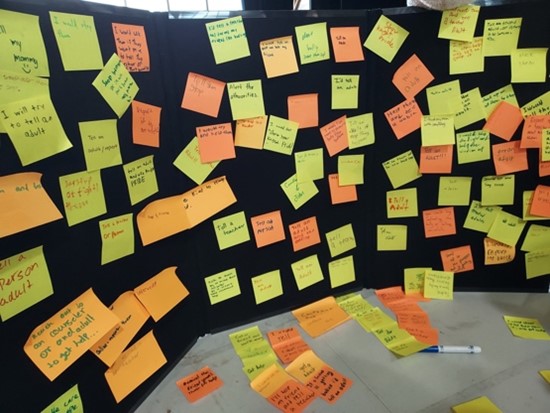
Create a bullying awareness event to open a discussion about what bullying looks like and how to take action. Have students write down what they would do if their friend was bullied on a sticky note wall and participants spun a wheel to answer questions about bullying scenarios to win a prize. This helps children understand how to identify bullying and actionable skills they can call upon to get help.

Bullying awareness event
Have students write down what they would do if their friend was bullied on a sticky note wall.


Encourage Role Play
We have also found success with conducting lessons on healthy communication through role play. Ask kids to create skits to demonstrate different communication styles. These will help participants identify assertive, aggressive, passive-aggressive, and passive communication, body language, and appropriate social filters to promote healthy communication and dialogue.
Then discuss how other communication styles could be hurtful and why social filters help to improve relationships and decrease instances of bullying.

Organize a Kindness Event
Organizing a school-wide prevention activity can help promote kindness and gratitude on a greater scale. Encourage students to write notes to friends, students, teachers, and staff about what they appreciated about that person. One of our recent events had about 700 messages written!

Kindness Event
Students to write notes to friends, students, teachers, and staff about what they appreciated about that person.


Schedule Ongoing Discussions
Conduct mini lessons on topics such as bullying prevention and empathy building. Setting aside a scheduled time to chat about bullying-related topics will keep it top of mind and build trust. These talks can also be used as an alternative to detention.

Bullying is a serious issue for military children, who may be more vulnerable in school settings due to their unique lifestyle. As caregivers, educators, and advocates, we must collaborate to provide resources and support to create a safe and inclusive environment for all children. By implementing these effective techniques, such as educating through games, encouraging role play, organizing kindness events, and scheduling ongoing discussions, we can equip military children with the necessary skills to identify and stand up to bullying. Let’s continue to prioritize the safety and well-being of our military children, not just in April — but every day.


Spotlight Magellan Health: National Doctors’ Day

On March 30, we are celebrating National Doctor’s Day where we honor all physicians for their dedication and contributions to the health of their patients. With the healthcare industry becoming more complex than ever with so many advancements, tools, and information, doctors continue to manage the overwhelming responsibility to be able to accurately diagnosis and treat their patients and continue to pave the way to better healthcare options. We’re spotlighting three of Magellan Health’s doctors who each explain why they chose to become physicians, and what are some of the most rewarding and challenging aspects of working in this field:

  • Doris Lebischak, M.D., medical director with the California plan, has been with Magellan since September 2020.
  • Lyle Forehand, M.D., medical director, has been with Magellan since July 2022.
  • Anjali Yeolekar-Dasari, M.D., medical director BH Presbyterian/ Magellan Health (NM), has been with Magellan since June 2021.

Continue reading to learn more from Drs. Lebischak, Forehand, and Yoelekar-Dasari on their experience as physicians:

Why did you become a physician and what is the most rewarding aspect of working in this field?

Dr. Lebischak: There is nothing more important than our health. When you have your health, you have everything. Anything that I do that contributes to collective or individual health makes me happy.

Dr. Forehand: This is what I was born to do. I really think I’m blessed to be doing this, especially after so many attempts when I was younger to do something else. Being a physician is great because I get to listen and improve at that skill as I’ve always talked more than listened. Especially as a psychiatrist, I must be good at hearing what people are saying and what they aren’t saying. The best part for me is when I have helped someone, not because of something I know as a doctor, but because of who I am as a person. Meaning, all the things I’ve done, or thought, or said all added up to who I am in that moment which helped change someone’s life for the better. I think those of us working in the behavioral health fields get that experience more than most – and it’s awesome!

Dr. Yoelekar-Dasari: I was brought up by a family of doctors in India. I would spend my summers helping my grandfather, a general practitioner, who practiced medicine in rural India. It was watching him interact with his patients and in turn the patient’s gratitude towards his work that made a deep impact on me. I started focusing on science and found the discipline intellectually challenging. I wouldn’t be who I am today if it were not to be for my mother’s constant encouragement to achieve my goal of being a physician and a psychiatrist. The field of medicine and psychiatry has allowed me to meet new people and has given me the opportunity to help make people feel better.

What are some challenges you face being a physician and how do you overcome them?

Dr. Lebischak: Becoming a physician was an impossibility when I first considered it. I started as a candy striper and believed that women could only become nurses or teachers. Following others that have braved the path before me (especially my sister) has helped me overcome the challenges. Today the challenge is implementing what we know. We have never had better healthcare, yet our life expectancy is decreasing. Lifestyle medicine can prevent 80% of all chronic medical conditions, including mental health conditions. Our collaborative care model gives us a way to support our members to make those connections and make good decisions to support their health.

Dr. Forehand: Everyone has an opinion about health. The Internet has now bred two generations of people who think they know about medicine as much as their doctors. People aren’t simple, and our problems aren’t easy.

Dr. Yoelekar-Dasari: I have spent my entire career practicing psychiatry in northern New Mexico which is very rural. There are shortages of doctors, psychiatrists, primary care doctors, and specialty physicians. This sometimes puts psychiatrists in positions of being everything to everyone and frequently having to cope with being the sole resource for the community. It is the gratitude from my patients that has kept me going.

Is there anything you’d like to highlight about working in this field? 

Dr. Lebischak: You have no health without mental health.

Dr. Forehand: It’s great to be in any helping profession. I see everyone in similar helping professions from first responders, teachers, to other health professionals as my colleagues. I’m proud to have them as colleagues.

Dr. Yoelekar-Dasari: Since joining Magellan, I have focused on improving services to the population diagnosed with Autism Spectrum Disorder (ASD). In the underserved and rural areas of New Mexico, members with diagnosis of ASD face challenges accessing services leading to poor outcomes. I have worked with my team on providing education on the importance of early intervention and working on improving services to this population.

What does National Doctor’s Day mean to you?

Dr. Lebischak: What a privilege it is to be a psychiatrist. It’s a time to reflect on all those who support us and the goal of mental health.

Dr. Forehand: I understand the first Doctors’ Day was established by the wife of a physician. I can relate to this as this is what means the most to me: that my wife, who has spent decades seeing what I gave up helping my patients and having to sacrifice with me, would honor the choice I made when I became a physician.

Dr. Yoelekar-Dasari: It is a day celebrated to recognize contributions of physicians to communities. In the past I have marked the day by making donations to underserved communities.


It’s a Great Time to Consider a Career in Behavioral Health

Challenges and obstacles create opportunities. Even since before the start of the pandemic, the provider community has dealt with workforce development challenges, especially in the field of behavioral health. As the demand for mental health and substance use disorder services have increased, so have the opportunities for a career in behavioral health for individuals at all experience levels.

Throughout the nation, healthcare workers are experiencing significant levels of burnout due to the pandemic. This once in a lifetime event has impacted the mental health of clinicians and has overly extended the existing provider workforce that was already experiencing a critical shortage. Although this is a widespread problem, rural areas and minority communities are more greatly affected. Many individuals living in these areas don’t have easy access to local primary care or mental health providers.

In Pennsylvania, there are currently a variety of job opportunities available, ranging from clinical, technical, and administrative roles of all experience levels. These roles in behavioral healthcare all provide the opportunity to make a positive impact in the lives of children, adolescence, and adults.

Watch this video created by Magellan Behavioral Health of Pennsylvania to learn more about the benefits of working in the behavioral health field.


Doc Talk: Discussing Depression in the Black Community with Dr. Beall-Wilkins

Discussions about mental health in the Black community shouldn’t be limited to Black History Month in February and BIPOC Mental Health Awareness Month in July. The conversations and action steps geared toward providing education, support, and resources require a year-round effort.

A recent article published by the Kaiser Family Foundation, shares that although Black people have made great contributions and achievements in the United States, “they continue to face many health disparities that adversely impact their overall health and well-being,” which have been “exacerbated by impacts of the COVID-pandemic, ongoing racism and discrimination, and police violence against and killings of Black people.”

What impact do these factors have on the mental health of individuals in the BIPOC community? Magellan’s medical director Rakel Beall-Wilkins, M.D., MPH shares her perspectives on depression and suggestions on ways to be supportive.

What is depression and what are some signs or symptoms?

Dr. Beall-Wilkins: Depression is a clinical illness characterized by:

  • Prolonged periods of low or sad mood.
  • Loss of interest or pleasure in activities.
  • Changes in appetite, sleep or energy levels.
  • Feelings of worthlessness or hopelessness.
  • Thoughts of death or suicide.

Depression can be caused by medical illness, substance abuse, and stressful social, academic, or occupational situations, but it can also develop more readily in individuals who have a family history of depression or other mental health conditions.

Other signs of depression may include:

  • Withdrawing from social activities, relationships, or hobbies.
  • Escalating drug or alcohol use.
  • Declining self-care in the form of poor personal hygiene and grooming.
  • Expressing feelings of hopelessness, worthlessness, and/or helplessness.
  • Neglecting to attend to chronic medical conditions or maintain follow-up with healthcare providers.

How does depression impact individuals in the Black community?

Dr. Beall-Wilkins: As of 2020, the National Survey on Drug Use and Health found that 6% of Black American adults and 12.9% of Black American adolescents experienced a major depressive episode within the last year. Despite increasing levels of depression within the Black community, studies also show that Black Americans are less likely than their White counterparts to receive psychotherapy or medications for their depressive symptoms. This disparity is largely attributed to limited access to healthcare coverage and culturally competent behavioral health providers, as well as pervasive cultural stigma.

Is it possible for someone to experience depression that is triggered by external factors and societal issues, such as violence, police brutality, political unrest, and racism? If so, how?

Dr. Beall-Wilkins: Yes, it is possible for depression to develop as a result of exposure to sociopolitical strife. In fact, during the week following the highly publicized death of George Floyd in May 2020, rates of depression and anxiety spiked from 36 to 41% among Black American respondents to the Census Bureau’s 2020 Household Pulse Survey.

Likewise, a 2018 study published in The Lancet found that police killings of unarmed Black Americans resulted in an increase in poor mental health days among Black American respondents. Though they may not know the victims of these circumstances personally, it is very common for Black Americans to collectively internalize the trauma of these events and feel despair over the possibility that a similar fate could befall them or their close family members and friends. Moreover, the repeated nature of these events can elicit sadness, hopelessness, and fear that things will never change.

What are tips for an individual that recognizes they are showing signs of depression?

Dr. Beall-Wilkins:

  • Visit your doctor and seek treatment: Regularly follow up with a primary care provider to ensure there are no untreated or undertreated medical conditions that may contribute to the development or worsening of depressive symptoms.
  • Stay connected: Stay connected to close friends, family, and spiritual community for support.
  • Diet and exercise play a role: Eat a balanced diet and engage in physical activity for at least 30 minutes a day, three times per week.

Resources: