1

Military Teen Toolkit

Resources for Supporting Your Teen’s Mental Health

Military life can be exciting and adventurous, but it also comes with challenges, especially for teens who face frequent moves, deployments, and the stress of a parent serving in harm’s way. This toolkit offers tips for military parents to help their teens navigate these challenges and maintain good mental health.

Communication is Key

  • Initiate Conversations: Don’t wait for your teen to “open up”. Regularly check in with them about their day, school, friends, and feelings.
  • Active Listening: When your teen talks, truly listen. Put away distractions, avoid interrupting them, offer empathy, and ask clarifying questions.
  • “I” Statements: Use “I” statements to express your concerns without sounding accusatory. For example, “I worry when you stay up so late” instead of “Why are you always up so late?”
  • Respect Privacy: Respect your teen’s need for privacy but establish boundaries. Let them know you’re always available to talk.
  • Deployment Discussions: Talk about deployments well before they happen. Address their worries about safety, missing friends, and managing household responsibilities.
  • Deployment Traditions: Create routines or traditions to maintain connection during deployments. This could be a weekly video call, writing letters together, or sending a small care package each week.

Building Resilience

  • Develop Routines: Establish consistent routines at home and school, even during deployments. This provides a sense of normalcy and stability.
  • Encourage Exercise: Regular physical activity reduces stress, improves mood, and promotes healthy sleep patterns.
  • Healthy Eating: Focus on providing nutritious meals and snacks to fuel your teen’s body and mind.
  • Relaxation Techniques: Teach your teen relaxation techniques like deep breathing exercises, mindfulness meditation, or progressive muscle relaxation.
  • Positive Coping Mechanisms: Help your teen develop healthy coping mechanisms like journaling, creative outlets, or spending time in nature.

Recognizing Signs of Trouble

  • Emotional Changes: Be aware of sudden changes in mood like increased irritability, sadness, or anger.
  • Behavioral Changes: Watch for social withdrawal, neglecting hobbies, or increased risk-taking behaviors.
  • School Struggles: Pay attention to slipping grades, difficulty concentrating, or lack of motivation for schoolwork.
  • Physical Changes: Notice changes in sleep patterns, energy levels, appetite, or self-care habits.
  • Substance Abuse: Be aware of signs of drug or alcohol use, which can be a way of self-medicating.

Getting Help

  • MFLC Program: The Military and Family Life Counseling (MFLC) program helps military families overcome challenges with free non-medical face-to-face support. Services are private and confidential with a few exceptions. Support is available at many installations and affiliated schools.
  • Military OneSource: This program offers a variety of resources, including:
  • 24/7 confidential counseling: Speak with a licensed therapist specializing in military families.
  • Workshops and webinars: Learn about common challenges teens face and develop coping strategies.
  • Online resources: Access articles, videos, and tools to support your teen’s well-being.
  • Chaplain Services: Chaplains offer non-denominational emotional and spiritual support and can be a valuable resource during difficult times.
  • Military Teen Support Groups: Connecting with other teens facing similar challenges can be a source of comfort and understanding. Talk to your teen’s school counselor or local military base about support groups.
  • Mental Health Professionals: If your teen needs more comprehensive support, consider seeking help from a therapist specializing in adolescents or military families.

Additional Resources

Remember:

  • Take care of yourself. A healthy parent can better support a healthy teen.
  • Celebrate accomplishments. Acknowledge your teen’s strengths and resilience.
  • Be patient. Building resilience and coping skills takes time and practice.
  • Seek professional help if needed. Don’t hesitate to ask for help if you feel overwhelmed or your teen needs additional support.
  • The military community is here for you. There are many resources available to support you and your family.



Inside the Warrior Games

Coach Michael Pride’s Journey from Athlete to Adaptive Sports Mentor

The Department of Defense (DoD) Warrior Games is an annual adaptive sports competition that showcases the resilience and athleticism of wounded, ill, and injured Service members and Veterans. Participants compete in various sports, including archery, to promote recovery, rehabilitation, and a sense of camaraderie among the military community.

Magellan Federal is proud to have partnered with nine coaches in the 2024 Warrior Games to create a supportive and empowering environment, enabling athletes to thrive and showcase their resilience and skill on their road to recovery.

In this exclusive interview, we speak with Coach Michael Pride, a former Warrior Games athlete turned track coach for the DoD Warrior Athletic Reconditioning Program. Now, as a coach, he shares his unique perspective on tailoring training to each athlete’s needs, the unforgettable moments that have shaped his coaching career, and the vital role of overall wellness in achieving success.

Q: Can you tell us a bit about your background and how you became involved in coaching for the Warrior Games?

A: I started coaching in 2011 after participating as an athlete in 2010. I competed in track, earning a silver medal in the 100-meter sprint and a bronze medal in the 200-meter sprint. I was wounded in 2008 in an improvised explosive device incident that hit the vehicle I was driving and crushed my arm after the vehicle rolled on it. I began rehab at the Naval Medical Center in San Diego, CA, from 2008–2011.

At that time, there was an overwhelming presence of wounded and ill Marines, which prompted the Marine Corps to adopt the name Wounded Warrior. Part of my rehab was participating in adaptive sports, so when the DoD came up with the Warrior Games, it was a no-brainer for me to try it, as I ran track in high school in Kansas City, MO, my hometown.

Q: How do you tailor your coaching approach for Warrior Games athletes?

A:  I tailor my coaching style to each athlete’s wounds or illness, and I try to coach them to be comfortable competing with whatever they have going on in life now. I tell them my story, and they begin to trust my coaching capabilities.

Q: What was your most memorable moment from coaching at the 2024 Warrior Games?

A: My most memorable moment was when I got a chance to coach against my mentors, Jeff Mcauley and Rodney Carson. When they left Team Marine Corps, they began coaching Team Army track athletes. My memorable moment happened in the 4×1 meter relay when Team Marine and Team Army finished simultaneously. Team Army pulled it out by only a photo finish to see who won. This was when I got my name considered for the Team Marine Head Coach position.

Q: How do you modify your training regimen so it is accessible for all athletes?

A: I give them all the same training regimen that coincides with their respective events. The athletes take the training regimen and begin training on their own, but I also remember their medical situations. Sometimes, I have to modify it, pending the injury or illness they may be dealing with. The adjustments are minor, and coaching to the injury isn’t that difficult. One sees certain injuries and illnesses year after year, which results in the athletes competing at a high level.

Q: What do you think is the most important element to adaptive sports coaching?

A: The most important element of adaptive coaching is seeing the individual athlete believe in themselves again. They believe they can still do what they love to do. They believe all they have to do is try, and results happen. They watch their loved ones smile at them because they’re enjoying life again. That’s what fuels me to come back year after year to coach.

Q: What advice do you have for others looking to incorporate overall wellness into their performance routines?

A: I suggest incorporating overall wellness into their training. Ensure you’re ready to integrate the body, mind, and spirit into everything you do. If one isn’t well, it causes tremendous stress in one’s life. Make sure your overall health is being taken care of first. Don’t be afraid to talk about what you have going on. Be honest with your overall wellness in order to become that person or athlete you want to be.

About the Author: Michael Pride is a 43-year-old retired Marine and current track coach. Born in Kansas City, MO, he was a standout track athlete in high school. After graduating in 1999, he enlisted in the Marine Corps in 2007, serving as a Motor Transportation Operator. During his deployment to Afghanistan in 2008, Michael was severely wounded by an IED, leading to over 20 surgeries and three years of rehabilitation.
Michael competed in the inaugural Warrior Games in 2010, earning silver and bronze medals in sprint races. He began coaching the Marine Track Team in 2012 and became Head Coach in 2021. Under his leadership, the team has achieved numerous medals and personal bests.

He retired from the Marine Corps in 2022 with several honors, including the Purple Heart, Navy Commendation Medal, and Navy and Marine Corps Achievement Medals. Michael is a father of three daughters and currently resides in Houston, TX, working as a truck driver for Schneider National.

*The appearance of U.S. Department of Defense (DoD) visual information does not imply or constitute DoD endorsement.


Managing stress and anxiety during election season

If you are feeling overwhelmed by the current political climate, you’re not alone. A national survey suggests more than 60% of registered voters in the U.S. say politics are a significant source of stress, and some even say they’ve lost sleep over it. Over 25% of voters also say politics have sparked conflict among their family and friends. Political stress, anxiety or even anger you may feel over politics can be hard to cope with.

Managing what you can control during election season

These feelings can have a negative impact on your emotional and physical health. Symptoms such as low energy, insomnia, loss of appetite, mood swings and tension are signs that you should not ignore. It is important to recognize what you can and cannot control as the election approaches. You cannot control other people’s opinions, beliefs, reactions or how they express themselves. Nor can you control others’ votes. There are, however, many things you can control during and after the election:

  • Limit the amount of time you spend on election news and discussions. While the 24-hour political news cycle on television, radio and the internet is almost impossible to escape, you can limit the amount of time you spend on media each day.
  • Be aware of the coverage, feeds and groups you follow. When you are watching or reading election coverage, avoid negative-leaning discussions, especially if you feel frustrated or upset by them.
  • Recognize how you interact on social media. Avoid giving angry or emotional responses to posts that do not align with your views. You are unlikely to change other people’s opinions; you are more likely to get unwanted and hostile feedback.
  • Focus on the time you spend with people. Prioritize your relationships with positive family and friends. Strong social connections can reduce stress and help you feel happier and more energetic.
  • Manage how you deal with stress. Whether it’s meditation, going out in nature, reading a book or working on a hobby, take time to do something that makes you feel good. Get enough sleep and exercise, eat a healthy diet and avoid using alcohol or drugs.
  • Stick to your boundaries. Before you enter a conversation, ask yourself if you’re in the emotional headspace to have it. Are you feeling stressed out, on edge or angry? Are you prepared to have a healthy debate or do conversations around this topic tend not to go well? If you feel like you’d be better off not having an election-related conversation, express your boundaries. You could say, “This conversation is really challenging for me, and it’s bringing up a lot of feelings. Can we move on to something else?”
  • Take action by using your time and talents. Give your time and skills to a cause you believe in. If you have a strong interest in a political cause or candidate, offer to help with a campaign or other event.

This article is for your information only. It is not meant to give medical advice. It should not be used to replace a visit with a provider. Magellan Health does not endorse other resources that may be mentioned here.

SOURCE: The Jed Foundation


Spotlight Magellan Health: Customer Service Week

Customer Service Week is an essential time for healthcare organizations to honor and recognize the dedication of their staff who provide compassionate care and support to members every day. This week, October 7 through October 11, is an opportunity to acknowledge the hard work, resilience, and commitment of those who provide exceptional customer service. We’re spotlighting four Magellan Health employees who share why they chose to work in customer service, and some of their most rewarding and challenging aspects of working in this field:

  • Kimberly Elias, senior wellness coach
  • Hauva Manookin, care manager, After Hours
  • Marlo Dale, senior EAP consultant-workplace support, Midwest care management center
  • Jordan Carroll, senior care manager

Continue reading to learn more from Kimberly, Hauva, Marlo and Jordan on their experiences working in customer service:

Why did you want to pursue customer service and what is the most rewarding aspect of working in this field?

Kimberly: I pursued a career in coaching because I am passionate about helping people create positive change in their lives. I believe that we all have the capacity to change, and I love being a conduit for this transformational process to occur.  The most rewarding part of my work is being a witness to the growth and transformation that occurs when one puts in the effort and believes in themselves. There is no greater reward then seeing someone discover their potential and go from merely surviving to thriving in life! That is what it’s all about for me.

Hauva: Cliched as it is, I pursued customer service via being a counselor because a life dedicated to helping others is a life lived with value. I have this idea that counselors are farmers; we plant seeds, we encourage watering, and we hope somewhere down the road the seeds grow. Even in our abbreviated roles and the snapshots of time we have with each person, we can still plant seeds and hope for their bountiful harvest. In that invisible moment that likely we will never know about, that is the moment where everything we learned and everything we have done becomes clear.

Marlo: I am a solution focused thinker. Helping the client move toward resolution is the most rewarding aspect of working as an employee assistance program specialist. I’ve found social work and customer service values are all aligned. Social workers and customer service representatives must demonstrate empathy, strong communication skills, respect, and a duty to serve. Despite the need of the respective client or customer, providing and linking to service in a competent, professional manner is the goal, and necessary to sustain every type of business.

Jordan: I always knew that I wanted to be in a field where I could help people. This job allows me to talk to so many people every day. While the severity of their needs may vary, each call is an opportunity to touch someone’s life in a positive way.

What are some challenges you face in this profession and how do you overcome them?

Kimberly: On occasion, I have clients who aren’t ready to create change. It’s hard when you work with someone and you know they can achieve what they set out to, but they do not see that in themselves. It can be frustrating at times when people give up and choose not to see themselves as worthy enough to stay the course and achieve their desired goals. I can work through this by remembering that although I didn’t get to witness any real growth, I know in my heart that I did plant a seed. That seed may grow in the future, and I must remain strong in my faith and hope that at some point, it will. It just may not be in my time, and that is okay.

Hauva: The biggest challenges here and everywhere in counseling is burnout. We all lecture self-care as this nebulous concept, but it’s too vague and too hard to feel successful at. For me, making sure I have slept and making sure I’m having fun is vital. Also, making sure I turn off work when I leave so that I can turn on fully when I am is crucial.

Marlo: One of the challenges I’ve faced in this profession is related to challenges in finding appropriate care and service for our members. Over the course of my career, I’ve learned to focus on what I can do, like staying present, focus on the individual, refer/assist/link as appropriate, and not fixate on what I can’t do. To be fully present in the moment and ensuring the person feels heard and seen is sometimes sufficient. I’m also working to shift my paradigm from problem resolution to facilitating change.

Jordan: At times there are busier days with calls with individuals with higher acuity, more risk concerns and simply hearing some of the hardship they go through can be tough. I try to make sure to count my own blessings, to be grateful for my life and again my opportunity and privilege to provide support to those going through a really difficult time. Self-care is an important part of this. I personally like to spend time with my husband and our two boys, spend time with family and friends, stay active and cook and bake!

Is there anything you’d like to highlight about working in customer service?

Kimberly: I would like to encourage all Magellan employees to spread the word that coaching is available to all employees and their household members.  I’d like to increase more awareness about this amazing modality that is so incredibly impactful to creating positive change!  I would love to see our entire book of business consistently spread the message about this service to their teams and employees so that we can reach and touch millions of lives!  We all need that special coach to help guide us on the path to success and I would love for everyone to capitalize on this! Our coaching team is exceptional with decades of experience. We are highly trained and skilled to coach members on numerous life issues. We are a devoted team of coaches, and we are firmly committed to helping everyone achieve their desired success.

Hauva: The people, the coworkers, supervisors, and management. I have had many iterations of this profession, and this place and these people have been my favorite. They are the most fun and most supportive I have ever had. It’s an honor to work with all of them and I only hope I can offer the same to each of them.

Marlo: It’s fulfilling to know that in the short amount of time and brief interaction we have with our customers, we may make a large impact on their day and lives.

Jordan: I think that customer service calls of all kinds reflect on the everyday interactions that we all go through. Everyone has needs that come up, and everyone has likely been in a position of asking for help. It is a great reminder that we are meant to be connected to each other one way or another. Humans are hardwired to support one another, and I am thankful for all my amazing coworkers who help our members daily by being on the other end of the phone.

What does Customer Service Week mean to you?

Kimberly: I think this is a great opportunity to validate and appreciate those who are truly devoted to delivering the utmost of care and support to the members we serve.  We live in a world that is saturated with fear, stress, and anxiety. When we intentionally set out to offer a service that comes from the heart, that is authentic, kind, and truly caring, we can create a ripple effect of positivity that can over time, create positive change.  This week is a powerful reminder of how impactful our service can be in the lives of people we serve.

Hauva: As I understand my role and my work, every week is customer service week; every day is customer service day; every client deserves the best customer service I can give in that moment.

Marlo: Customer Service Week is a time to reiterate the importance of what we do, while highlighting the hard work and dedication of those serving individuals in need.

Jordan: To me, customer service week is about putting the spotlight on those that help to remind each of us why we chose to get into this field. It’s about making sure we are taking good care of ourselves, as good of care as we provide to those we serve.


Building Circles

The Importance of Finding a Community Wherever You Land

The military lifestyle is one full of constant change and often accompanied by stress, anxiety, and loneliness. One factor that weighs heavily on many military members and their families is the isolation that comes from the nomadic nature of frequent permanent change of station (PCS) moves over the course of a Service member’s career (Tong et al., 2018).

Everyday Burdens Feel Twice as Heavy When Going it Alone

Humans are, by nature, creatures that live in groups with close familial and social bonds. Military families uproot multiple times over the course of a career, and at each new location, are faced with a choice: build a new circle of people or go it alone. While a strong sense of independence and self-reliance are strengths that most Service members and their family members develop, it is crucial that they reach out at new commands and make the effort to meet people they can absorb into their circle of people that they can rely on. Where a civilian family may have the luxury of grandparents nearby to help with picking up a sick child from school, a cousin who is a great fixer to help around the house, or childhood best friends to recharge with after a long week, a military family often finds themselves alone in a new city with no sources of support (Tong et al., 2018). Certainly, families can hire babysitters, repair companies, and take time for themselves, but there is something incredibly valuable in having an established community or group of people you belong to who become your supporters. Deployments are times when this is especially important. Having people to turn to while a spouse is away allows the spouse at home to have support and companionship. It also gives the deployed Service member the freedom to focus on their mission knowing that their family is supported by a trusted community at home.

The Military Culture is Built on Shared Experience and Supporting Each Other

There are a lot of built-in ways for military families to connect with other families. Military and Family Life Counselors (MFLCs) can support them by giving encouragement to take the first step. A command Ombudsman is an excellent resource for connecting families with each other and with important local resources! The Morale, Welfare, and Recreation (MWR) center often holds events and activities where members and their families can meet other families (Ways to Settle In to Your New Home and Community 2024). Military members and families experience many of the same challenges and are often happy to lend a hand when someone needs help. Making those initial connections makes finding support much easier. Meeting people is sometimes not the hardest part; putting in the effort to make plans and build relationships can seem daunting on top of an already busy schedule. For some, knowing that another move is inevitable makes building relationships with people they will have to say goodbye to in a few years seem pointless. While saying goodbye is difficult, life is made richer by having made connections with individuals and having experiences with others, even if only for a short time.

When working with our military members and families, MFLCs provide a source of support and encouragement but also resources that they can use to strengthen their support system and coping skills outside of the counseling sessions. So make sure to build a community circle to feel connected to wherever you land!

References

  • Tong, P. K., Payne, L. A., Bond, C. A., Meadows, S. O., Lewis, J. L., Friedman, E. M., & Maksabedian Hernandez, E. J. (2018). (rep.). Enhancing Family Stability During a Permanent Change of Station: A Review of Disruptions and Policies. Rand Corporation. Retrieved July 31, 2024, from https://www.rand.org/content/dam/rand/pubs/research_reports/RR2300/RR2304/RAND_RR2304.pdf.
  • Ways to Settle In to Your New Home and Community. Military OneSource. (2024, July 29). https://www.militaryonesource.mil/resources/millife-guides/settling-in-to-a-new-home/


Managing Seasonal Affective Disorder

October is National Depression and Mental Health Screening Month. Seasonal Affective Disorder (SAD) is a type of depression linked to seasonal changes, typically beginning when fall starts and intensifying during late fall or early winter.

What’s the difference between SAD and the “winter blues”?

Many people feel a little down during colder months because they are stuck inside, and it gets dark early. These feelings, often called the “winter blues,” are temporary. SAD is a clinical form of depression that affects your daily life, including how you feel and think. SAD can last up to five months of the year.

What causes SAD?

About 5% of adults in the U.S. experience SAD. It tends to start in young adulthood. SAD may be caused by reduced serotonin and vitamin D levels, altered melatonin levels, decreased sunlight and shorter days.

What are the symptoms of SAD?

If you have SAD, you may experience mood changes and symptoms of depression, including:

  • Persistent sadness
  • Increased anxiety
  • Food cravings and weight gain
  • Extreme fatigue and low energy
  • Feelings of hopelessness
  • Social withdrawal
  • Sleep disturbances

What are treatment options for SAD?

Treatment should be tailored to you and supervised by a healthcare professional. Options include:

  • Spending time outdoors—Getting more sunlight can help improve your symptoms.
  • Light therapy—Using a light therapy box daily helps regulate circadian rhythms and boost mood.
  • Cognitive behavioral therapy—This treatment helps identify and change negative thought patterns.
  • Vitamin D—A supplement may help if a deficiency is present.
  • Medication—Antidepressants may be prescribed for severe cases.

For more on Seasonal Affective Disorder, visit our website for National Depression and Mental Health Screening Month, MagellanHealthcare.com/Mental-Health, and be sure to check out the suicide prevention tip sheets and awareness campaign toolkit.

Sources


September is Suicide Prevention Awareness Month

Military and Family Life Counselors (MFLC) are key components in the fight to prevent suicide in service members and their families. With clinical expertise, collaborating with helping agencies, and connecting participants to appropriate resources, MFLCs embody the 2024 Suicide Prevention Awareness Month theme: “Joining Your Fight: Connect to Protect” (Defense.gov).

Trends of Military Suicide

There has been an increase in suicides for active-duty service members from 2011 to 2022, with 492 suicides in 2022. This was slightly more than in 2021, but less than in 2020. In addition, the rate is similar to the civilian population after accounting for population differences. Suicide data was not available for family members in 2022 however, data from 2021 showed a slight decrease from previous years (Defense Suicide Prevention Office).

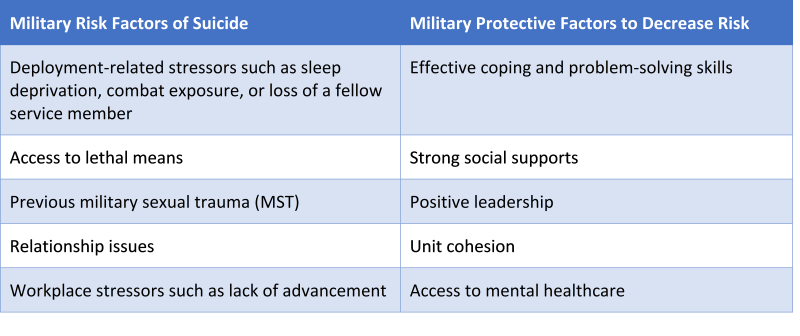
Risk & Protective Factors

While the rate of suicide is similar between service members and the civilian population, there are factors unique to the military community that increase the risk of suicide. It is important to not only understand these factors, but also know the protective factors that can decrease these risks.

Suicide Prevention Resources

If you are a service member or military family, connect with a MFLC for local suicide prevention resources. Additionally, here are options for further information and support:


Data-driven Suicide Prevention: Enhancing EAP and Insurer Behavioral Health Program Effectiveness

In today’s fast-paced, high-pressure world, mental health has emerged as a critical public health concern. Suicide, now the 11th leading cause of death in the United States, continues to be a major concern. After a brief decline in 2019 and 2020, suicide rates rose in 2021, with an average of 132 suicides per day—a 5% increase. The situation worsened in 2022, with an additional 3% increase, bringing the average to 135 suicides per day. By 2023, over 50,000 Americans died by suicide, marking the highest number on record. These concerning statistics underscore the importance of integrating targeted suicide prevention strategies into all behavioral health initiatives.

While Employee Assistance Programs (EAPs) and behavioral health benefits from commercial and public insurers provide support for individuals facing mental health challenges, these organizations can further strengthen suicide prevention efforts by implementing data-driven systems that proactively manage and mitigate suicide risk, including:

  • Early identification—Preventing crises before they escalate is critical. Utilizing predictive analytics, organizations can identify early warning signs and intervene promptly.
  • Ongoing assessment—Continuous mental health monitoring allows care to be adjusted and personalized as needs evolve.
  • Proactive outreach—At-risk individuals often don’t seek help on their own. Through population engagement tactics, such as targeted emails, app notifications and direct outreach by care managers trained in suicide prevention, organizations can ensure timely support reaches those in need.
  • 24/7 supportive care—Round-the clock access to support is vital for effective suicide prevention. On-demand resources like digital tools for mental health and wellbeing, educational materials, safety plans, hotlines, crisis text lines and direct connections to mental health professionals provide individuals with the help they need, whenever they need it.
  • Specialized care management—Licensed clinicians trained in mental health services and evidence-based practices have the expertise to deliver essential support to at-risk individuals, including designing individualized care plans to enhance protective factors, such as building social support networks and improving problem-solving skills and using ongoing remote monitoring to adjust and personalize interventions as needs evolve.
  • Sub-specialty networks—Access to clinicians specializing in mental health conditions ensures at-risk individuals receive the focused care they need. Also, subspecialty medical clinics and primary care providers should screen for mental health conditions. Some physical health conditions (e.g., traumatic brain injury and cancer), can carry a risk of suicide.
  • Outcomes and data-driven approach—Using data to measure the effectiveness of suicide prevention programs allows organizations to continuously refine their strategies, ensure efficient use of resources and better target interventions.

Integrating data-driven targeted suicide prevention and risk management strategies can significantly enhance the effectiveness of EAP programs and behavioral health benefits provided by private and public insurers. Early detection of warning signs and timely interventions can reduce the risk of suicide, save lives and foster a healthier, more resilient society.

Learn how Magellan Healthcare’s data-driven approach is helping organizations safeguard lives here.

Sources: